Please complete the form below and one of our team will be in touch.
Press Release: National Study to Improve CBT Outcomes Between Sessions
The University of Oxford, in partnership with digital mental health platform experts PCMIS, has launched a new study to explore a crucial but often overlooked part of mental health care: what happens between therapy sessions.
Backed by the Medical Research Council (MRC), the GAP-CBT Study is now running in selected NHS Talking Therapies services. It aims to help people receiving Cognitive Behavioural Therapy (CBT) for anxiety or depression get more out of their treatment by understanding how they use CBT strategies in everyday life, outside of appointments.
CBT is the most widely used psychological treatment in the UK. It can be highly effective, yet many people struggle to maintain progress between sessions, especially when daily pressures or low motivation make it harder to practise what they’ve learned. The study will explore how people use this time, the barriers they face and where extra help might be needed.
What makes this project different is how easily it fits into existing care. Instead of asking patients to use a new platform or complete extra paperwork, participation happens directly through the PCMIS Patient Portal, the secure digital system already used by many NHS therapists. Patients take part using the same system they’re familiar with from their regular appointments, making the process simple, streamlined, and part of routine care. It also means therapists can support research activity without adding to their workload.
To help make the study more inclusive, the trial team, in collaboration with PCMIS, is supporting access to questionnaires and materials in five languages: English, Urdu, Farsi, Arabic and Polish. While these are not all standard languages on the PCMIS Patient Portal, this additional support within the study ensures that more people can take part in their preferred language, improving engagement and allowing more voices to be heard. It’s a practical step towards ensuring that digital mental health research and tools better meet the needs of diverse communities.
Dr Graham Thew, Clinical Psychologist and Clinician Scientist Fellow at the University of Oxford, said:
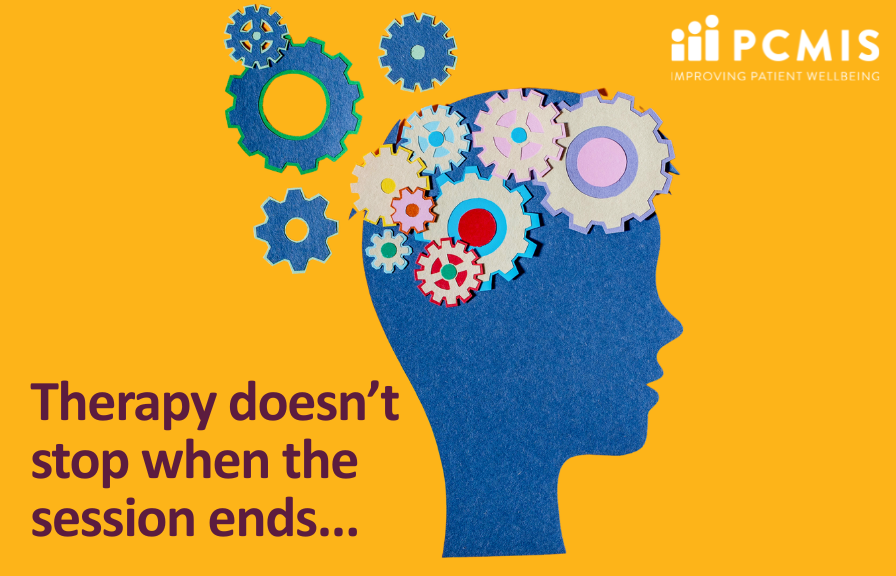
“Therapy doesn’t stop when the session ends. We want to understand what daily life looks like for people between appointments, what they remember, what they try out, and what makes it easier or harder to keep going. That’s where much of the real change takes place.”
The study was co-designed with both clinicians and people who have personal experience of therapy, to make sure it reflects the real challenges people face. Using short digital surveys and interviews, the study will gather insights that could inform how therapists offer support, and how digital tools can be better designed to fit into people’s lives.
Byron George, CEO of PCMIS, added:
“We’ve made research part of the care journey, not something separate. Embedding GAP-CBT into the PCMIS Patient Portal means we are empowering patients to get involved and seamlessly contribute to valuable digital health research, helping NHS services and clinicians can gain valuable insights without disrupting their workflow.”
PCMIS, developed by the University of York, is already used across many NHS mental health services to manage referrals, monitor progress and support patient engagement. Its integration of studies like GAP-CBT shows how digital infrastructure can support innovation and real-time improvements in therapy delivery.
The study is currently live in many NHS Talking Therapies services. The findings will help shape more effective CBT interventions and improve long-term outcomes for people affected by anxiety and depression.